“Greening the streets” one planting strip at a time, part 2
by Melinda Davis and Marilyn Salvas
On a chilly day in late May, a group of volunteers joined Melinda and Marilyn, Watertown Community Garden members, at Anne P’s house for Part 1 of a two-part series. We used a layered cardboard and compost process to prepare Anne’s planting strip to be a future garden. A planting strip (or roadside strip) is the often-neglected strip of city dirt between the road and the sidewalk. Check out the details of Part 1 here.
Part 2
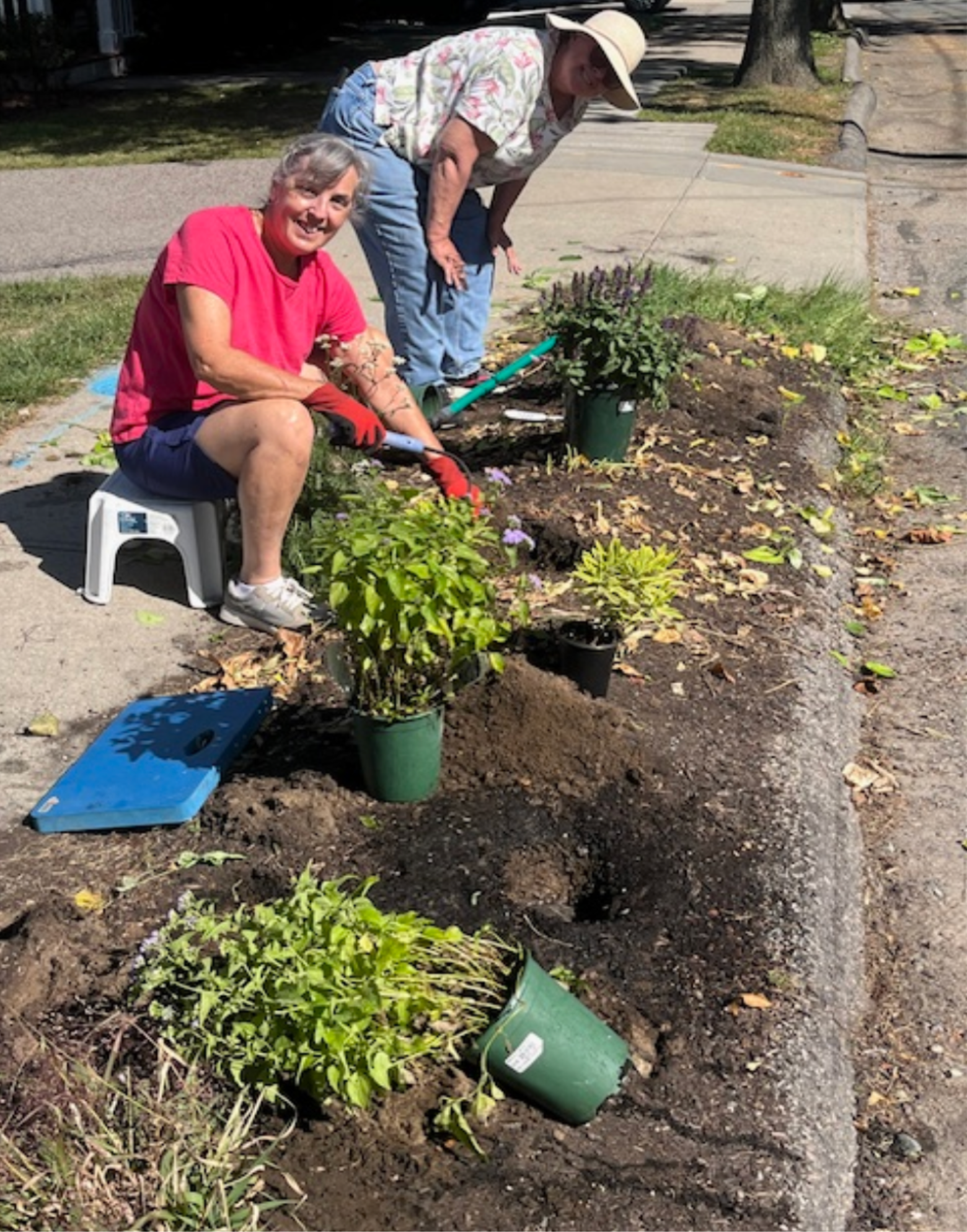
On September 12th, a perfect time to plant in New England, we gathered back at Anne’s house. Two months is a reasonable amount of time to wait for the cardboard to decompose. However, due to busy schedules, our planting party happened five months later, with still plenty of time for plants to establish themselves before the winter.
PLANT CHOICES
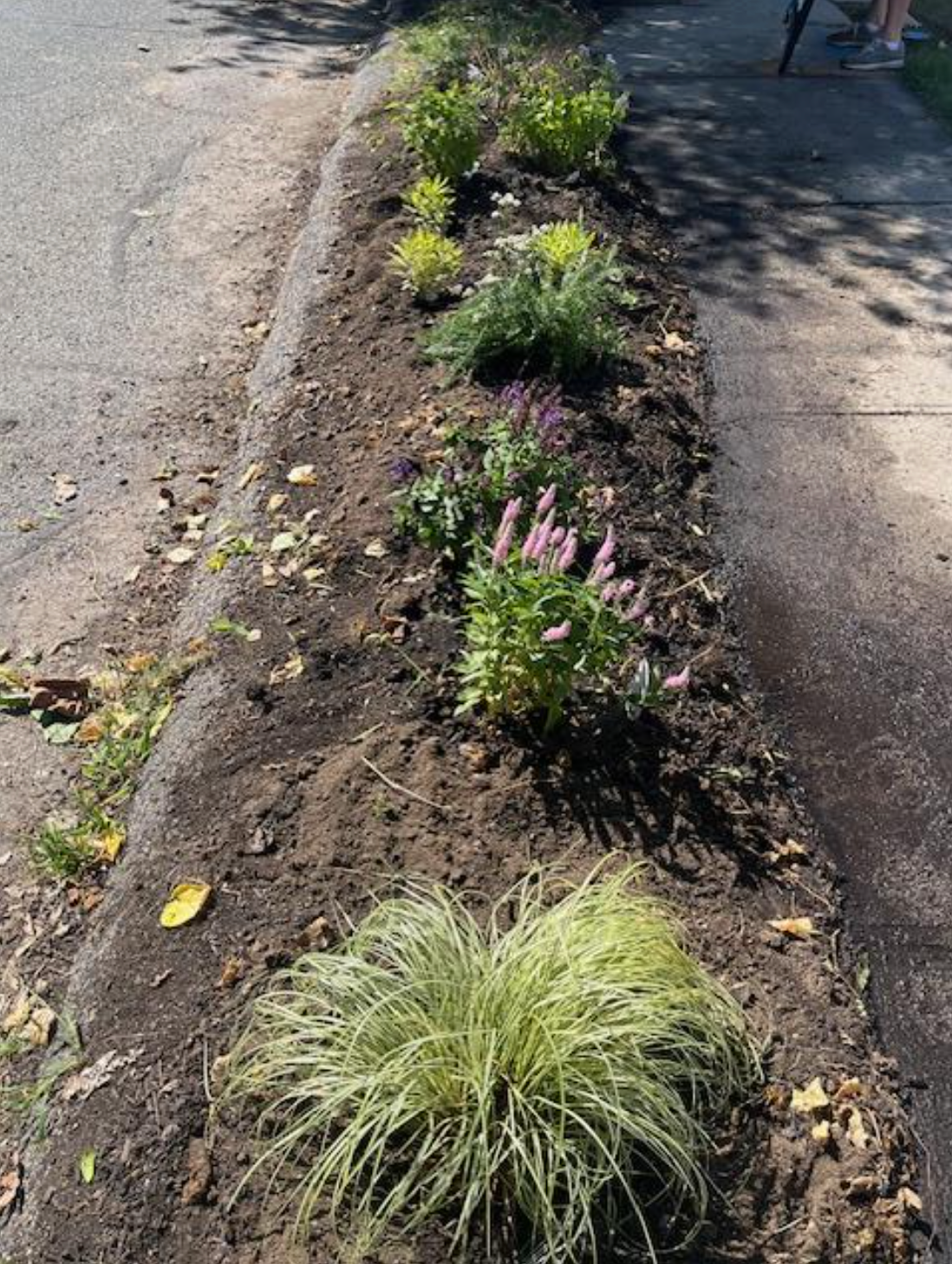
Anne had purchased several native plants that offer food and shelter to the pollinators:
- Butterfly Milkweed (Asclepias tuberosa) to feed Monarch butterflies and their caterpillars
- Little Bluestem (Schizachyrium scoparium) to offer overwintering shelter and fluffy seed heads
- Yarrow (Achillea millefolium), an easy-to-land-on flower loaded with nectar and pollen
- Purple Love Grass (Eragrostis spectabilis) a reliable clumping grass with beautiful lavender tufts in the fall
- Sneezeweed (Helenium autumnale), a yellow daisy offering late season nectar, pollen, and shelter
- Lucerne Blue-eyed Grass (Sisyrinchium angustifolium 'Lucerne'), a cultivar of the native species offering early season nectar and pollen

Both Sneezeweed and Lucerne Blue-eyed grass like moist, well-drained soils so these two plants will need extra attention and more water if they are to remain in the strip.
Anne also chose a few non-natives that caught her eye, including Blue Marvel Salvia (Salvia nemorosa 'Blue Marvel'), a cultivated garden hybrid known for its extra-large blooms and compact growth, and Blue Mistflower (Eupatorium coelestinum), a late season pollinator attractor. Anne will keep a closer eye on the non-natives and move them to another part of her yard if the roadside proves to be too harsh for them.
LAYOUT
We arranged the plants based on their preference for sun to part shade, water needs, height and width, and on Anne’s preference for color scheme. In Watertown, roadside gardens must maintain a height of 2 ½' or less for visibility. (Please see the first link below for this and other important city guidelines.)
Once we were happy with the layout, it took less than an hour to dig the holes, add water to them, plant the plants, and water the new garden. Once established after a few seasons, drought and salt-tolerant native plants should need very little water, except in extreme times of little rainfall.
For a step-by-step instructions on how to plant a roadside garden in Watertown, please check out the following resources:
- Watertown's Planting Strips webpage
- WCG's
Guide to Creating a Roadside Pollinator Garden PDF

Anne is thrilled with her new pollinator strip. She's been wanting to create it for a long time and was happy and grateful to work with WCG to make it come true.
JOIN THE CITY-WIDE INTERACTIVE POLLINATOR MAP
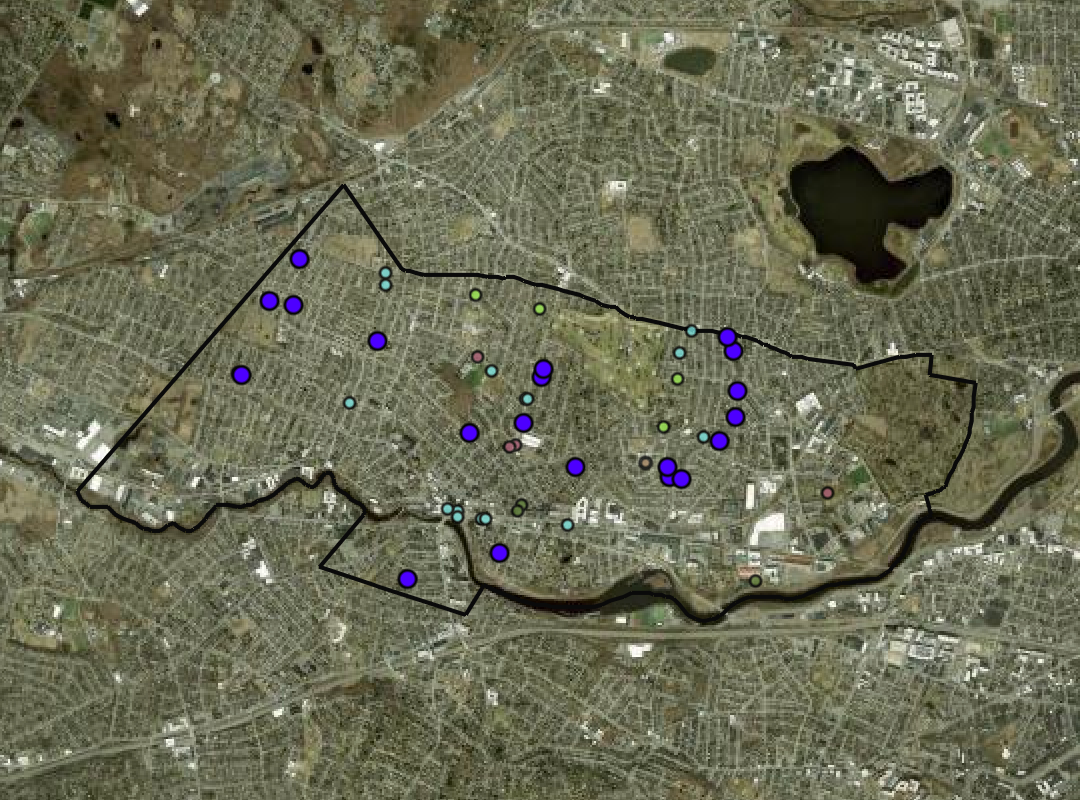
If you grow a planting strip garden in front of your home, send a garden photo and your address to Katie Swan, Watertown’s Environmental Planner/Conservation Agent. You will remain anonymous and your strip/bump-out can join Watertown’s steadily growing city-wide pollinator gardens.
Watertown's Pollinator Gardens
(MassGIS Data Hub)
Visit our Pollinator Pathways page to see the community and public gardens stewarded by Watertown Community Gardens.
It doesn’t take much to turn these strips into havens for bees, butterflies, insects and native plants. You can be a force for nature in your own neighborhood! Consider joining us next spring when we host our two-part series again.


