“Greening the streets” one planting strip at a time, part 1

May 30, 2026

by Marilyn Salvas and Melinda Dennis

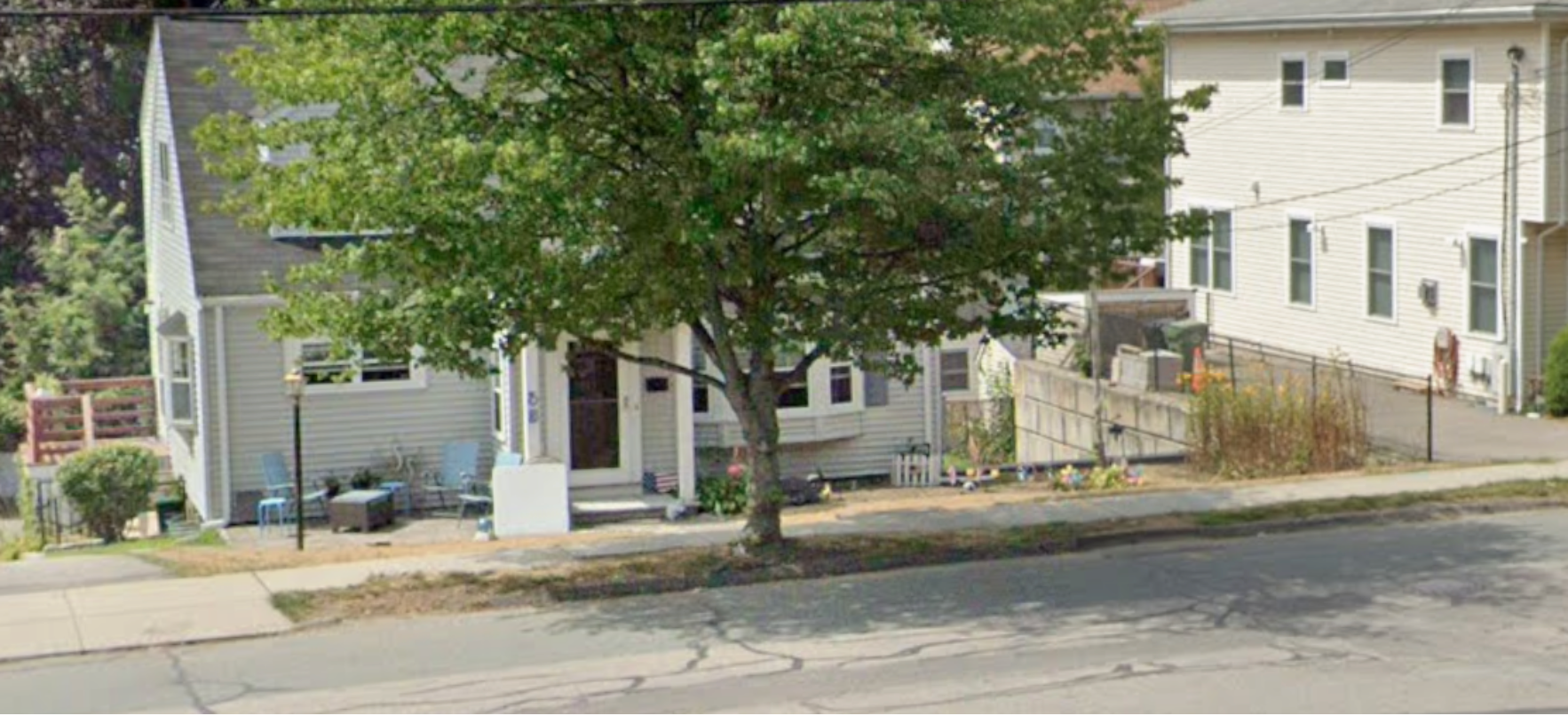
A planting strip is the no man's land lying between the sidewalk and the street. Often these areas struggle to grow anything; most of the plant life is crabgrass and weeds. They are covered with road salt after every snow storm, and often are used for parking. Drivers may pull onto the planting strip and unintentionally crush whatever is growing there.


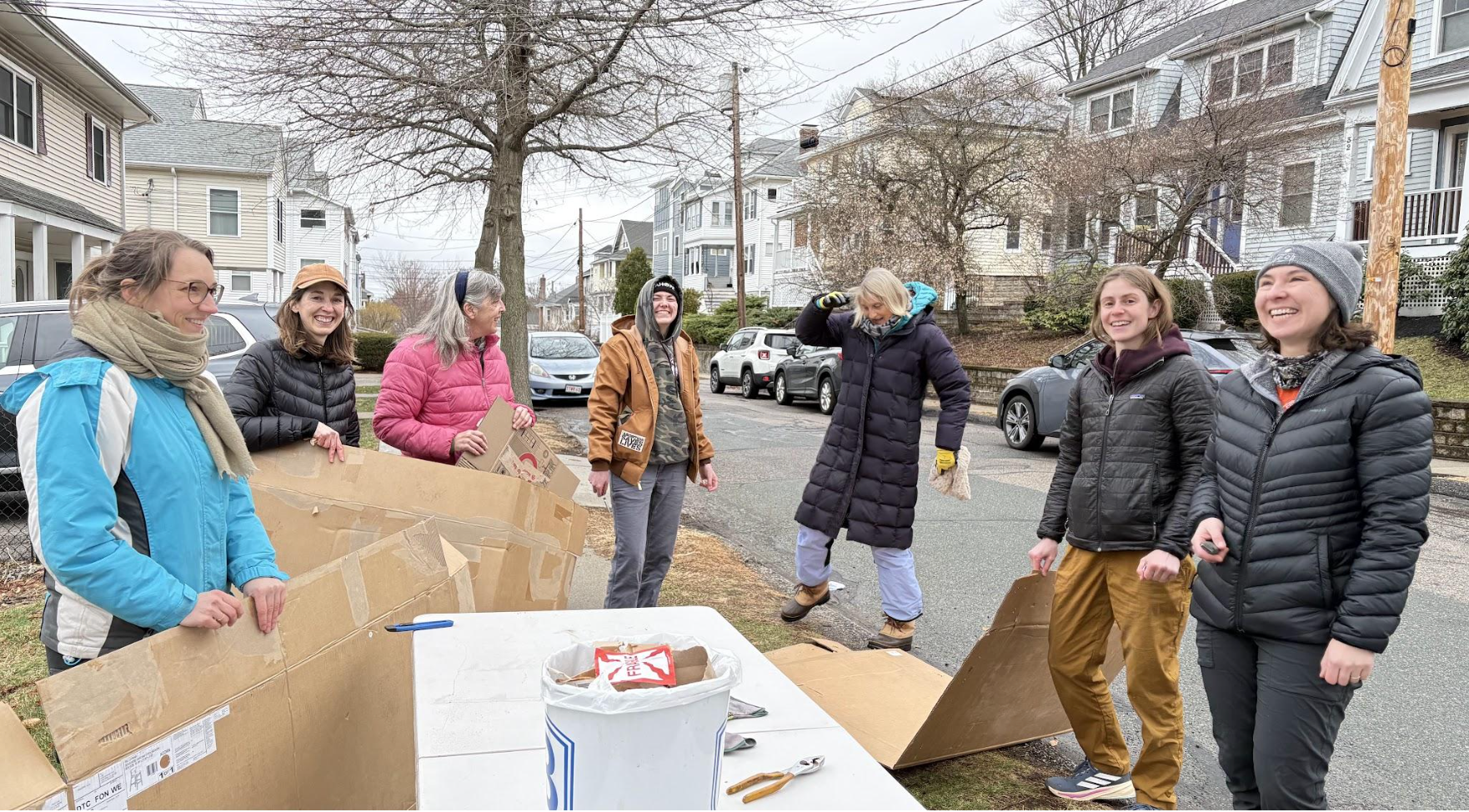
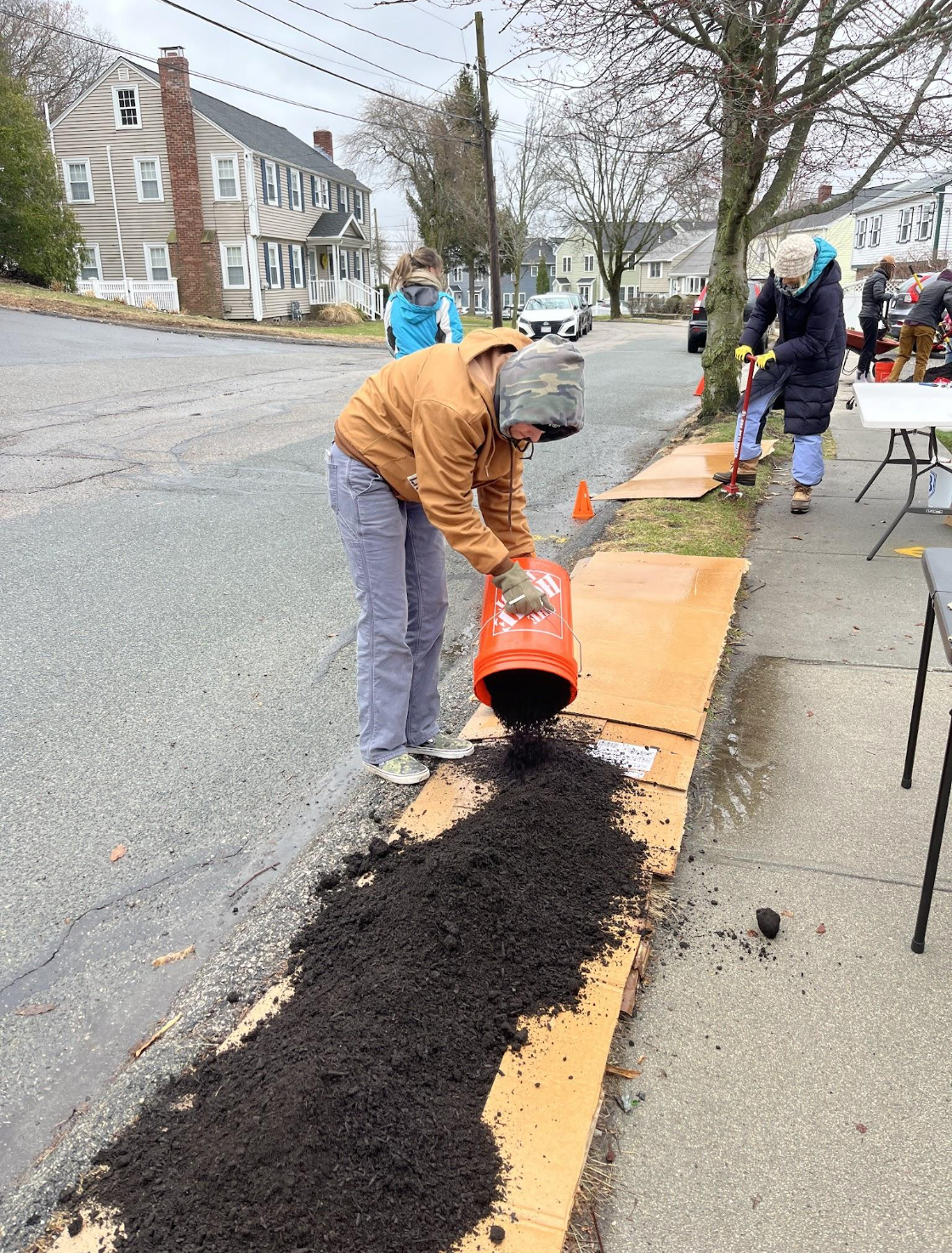
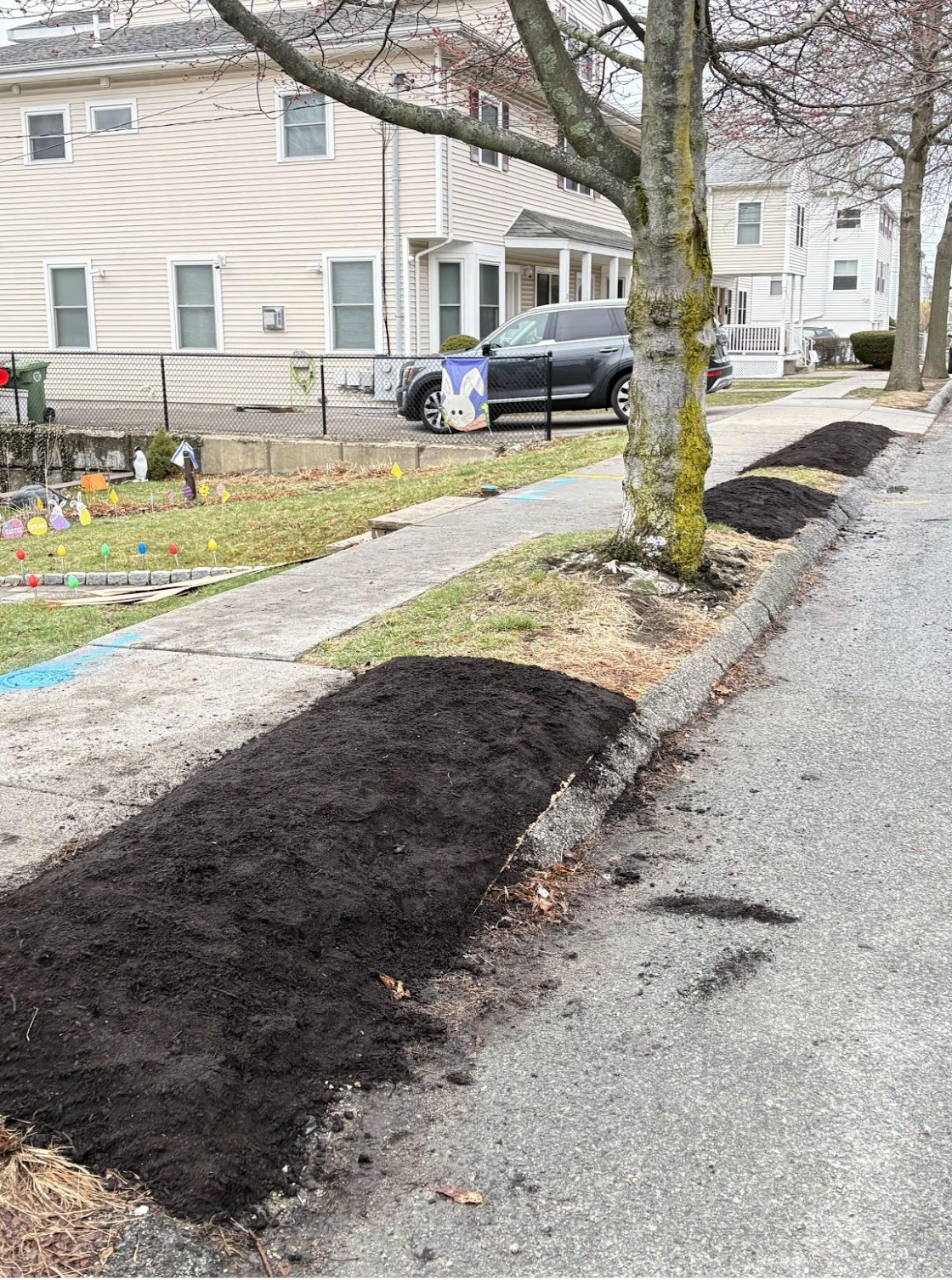
It doesn’t have to be that way. This spring, on a damp and chilly early April day, seven volunteers from Watertown Community Gardens joined together to start the transformation of a bleak planting strip into a home as a lush new pollinator garden. 

After having attended WCG's workshop on Growing Your Bump-Out (see the workshop presentation slides), Anne P. offered up the planting strip for a live demonstration of how to turn a roadside area into a pollinator garden.

The process is easy: 

  • Review WCG's Guide to Creating a Roadside Pollinator Garden.
  • Call Dig Safe (811) to get all of the utilities in your garden area marked. 
  • Gather cardboard (Avoid bright colored cardboard or cardboard with a waxy feel. These may have “forever” chemicals that we want to keep out of the environment.) A quick test to see if your cardboard is safe is to drop a drop of olive oil on the cardboard. If it is absorbed, the cardboard is safe to use. Cardboard blocks the weeds that are growing in your planting strip.
  • Order compost - an easy way to do this is to buy enough bags to lay them end to end over the area you wish to plant.  Check out the WCG Resources page to find sources for compost. Compost is rich with organic nutrients and will help your garden get off to a good start.
  • Gather some local gardeners or neighbors to help you cover your planting strip with overlapping, flattened cardboard, then compost. This step should be done at least a month before planting.

It took Anne and seven volunteers about an hour to go from crabgrass to a rich environment for pollinator plants.

You can do it, too! 


On June 25, we will hold a
“Planting the Planting Strip” event to transform Anne’s garden design into a reality by filling her planting strip with salt- and drought-tolerant native plants recommended in our roadside gardening brochure, linked above.


For more information, also see
Watertown's Planting Strips webpage.

Share this post on

Recent Posts

Friends of Bees logo
May 19, 2026
by Pam Phillips  As you may know, for the last several years, Friends of Bees, a working group of Watertown Citizens for Peace, Justice, and the Environment (WCPJE) , have been meeting and collaborating with WCG’s Pollinator Pathways Committee. Together we have held the Life-Friendly Garden Tour, maintained public pollinator gardens, led pollinator walks, and more. Together we support Watertown's Mayor's Monarch Pledge . Together, we educate about and advocate for our native bees, Monarch butterflies and other pollinators. This year, Friends of Bees are making that togetherness official by merging with the Pollinator Pathways Committee. Twelve years ago, Watertown Citizens asked “What is happening to the bees?” and formed a new working group, Friends of Bees. Friends of Bees learned about the many challenges bees face, especially pesticides and habitat loss. Today, we welcome Friends of Bees to a new home with Watertown Community Gardens. The Life-Friendly Garden Tour, with its rich history of 28 chemical-free garden tours over nearly twenty years, will also be hosted by WCG. WCPJE has always served as an incubator for community groups. Over the years, many initiatives started and fostered under WCPJE later matured into independent organizations expanding the circle of like minded activists. Watertown Community Gardens was one such group. Friends of Bees thanks WCPJE for an abundance of enthusiasm and support as we branch off, while maintaining our role in the larger Watertown community. To stay in touch with Friends of Bees and the Life-Friendly Garden Tour please visit Watertown Community Gardens at our new website . When you sign up for the WCG newsletter , make sure to indicate your interest in pollinators and eco gardening. Details of the 2026 Life-Friendly Garden Tour will be shared in the WCG newsletter this summer. Keep buzzing!
April 23, 2026
By Linda Relson, with Pam Phillips Spring is a really exciting time to see the landscape coming back to life. On multiple occasions in the last couple of weeks, I've seen queen bumblebees, Bombus spp. , drinking nectar from cherry blossoms, and zooming along the ground looking for nesting sites. It’s a sure sign of the season and it lifts my spirits every time.
April 22, 2026
By Naomi Shea The season has officially kicked off at Watertown Community Gardens, bringing excitement and potential for new growth—both in the garden and within our community. This season, we're thrilled to have partnered with Waltham Fields Community Farm (WFCF), which graciously opened its greenhouse to support our efforts in planting our donation plots. Arsenal Park Community Gardens (APCG) captains, Marilyn and Susan, carefully prepared trays of seedlings at home before transporting them to the greenhouse. These trays included a variety of crops such as lettuces, mixed greens, leeks, onions, tomatoes, kale, chives, parsley, and more!
Friends of Bees logo
May 19, 2026
by Pam Phillips  As you may know, for the last several years, Friends of Bees, a working group of Watertown Citizens for Peace, Justice, and the Environment (WCPJE) , have been meeting and collaborating with WCG’s Pollinator Pathways Committee. Together we have held the Life-Friendly Garden Tour, maintained public pollinator gardens, led pollinator walks, and more. Together we support Watertown's Mayor's Monarch Pledge . Together, we educate about and advocate for our native bees, Monarch butterflies and other pollinators. This year, Friends of Bees are making that togetherness official by merging with the Pollinator Pathways Committee. Twelve years ago, Watertown Citizens asked “What is happening to the bees?” and formed a new working group, Friends of Bees. Friends of Bees learned about the many challenges bees face, especially pesticides and habitat loss. Today, we welcome Friends of Bees to a new home with Watertown Community Gardens. The Life-Friendly Garden Tour, with its rich history of 28 chemical-free garden tours over nearly twenty years, will also be hosted by WCG. WCPJE has always served as an incubator for community groups. Over the years, many initiatives started and fostered under WCPJE later matured into independent organizations expanding the circle of like minded activists. Watertown Community Gardens was one such group. Friends of Bees thanks WCPJE for an abundance of enthusiasm and support as we branch off, while maintaining our role in the larger Watertown community. To stay in touch with Friends of Bees and the Life-Friendly Garden Tour please visit Watertown Community Gardens at our new website . When you sign up for the WCG newsletter , make sure to indicate your interest in pollinators and eco gardening. Details of the 2026 Life-Friendly Garden Tour will be shared in the WCG newsletter this summer. Keep buzzing!
April 23, 2026
By Linda Relson, with Pam Phillips Spring is a really exciting time to see the landscape coming back to life. On multiple occasions in the last couple of weeks, I've seen queen bumblebees, Bombus spp. , drinking nectar from cherry blossoms, and zooming along the ground looking for nesting sites. It’s a sure sign of the season and it lifts my spirits every time.
April 22, 2026
By Naomi Shea The season has officially kicked off at Watertown Community Gardens, bringing excitement and potential for new growth—both in the garden and within our community. This season, we're thrilled to have partnered with Waltham Fields Community Farm (WFCF), which graciously opened its greenhouse to support our efforts in planting our donation plots. Arsenal Park Community Gardens (APCG) captains, Marilyn and Susan, carefully prepared trays of seedlings at home before transporting them to the greenhouse. These trays included a variety of crops such as lettuces, mixed greens, leeks, onions, tomatoes, kale, chives, parsley, and more!

RECENT Posts