Bees of Spring

Catherine McQuestion • April 15, 2025

By Pam Phillips 

Have you been noticing more pollinators buzzing around your backyard as the weather warms up? Read this great piece by Pam Phillips of Friends of Bees to learn about which species of bees you can expect to see this time of year. You can find out more about Friends of Bees here


Spring has arrived, with the first green shoots, the first flowers, and the first bees. The bees you’re most likely to see this early are honeybees, bumblebee queens, and mining bees.


Honeybees are awake all winter and will come out on warm days. You may have already seen them drinking nectar in snowdrops, crocuses, and dandelions. They also gather pollen from trees, even wind-pollinated trees, such as oaks, willows, and maples. The hive will feed this pollen to the brood when the queen begins laying eggs again.


Bumblebee queens sleep underground over the winter, and emerge in early spring. You may notice unusually large bumblebees zigzagging around your garden, as if they are looking for something. They are!  Queen bumblebees need a safe place to make their home, preferably a warm cavity that is very find to find, such as an old mouse nest. The queens drink nectar to fuel their hunt, often going high up into flowering trees, such as redbuds, cherries, and other fruit trees. They will also gather pollen, but not until they have found a home and started laying eggs. So if you see a big fat bumblebee carrying pollen on her legs, she’s a young queen with babies to feed. Once she has raised the first generation of workers, she will stay in the nest for the rest of her life.

A bumblebee queen gathering pollen from Bleeding Heart flowers
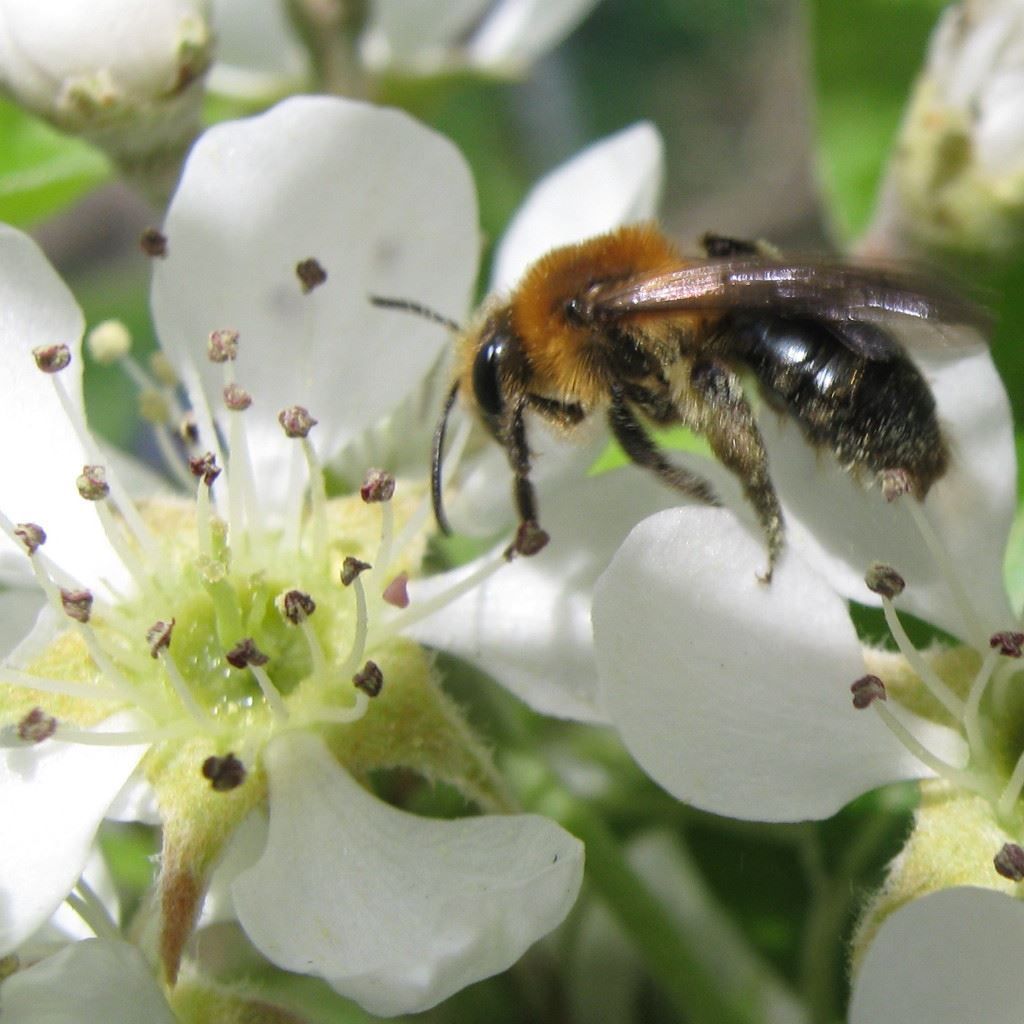
There are also several kinds of mining bees that emerge in spring. They are generally brownish or dark bees around the size of honeybees. They have slept underground since last spring, often under bare patches or lawn near trees that produce the pollen they need, such as willow, red maple, cherries, and other fruit trees. When they emerge, they leave open holes that look like someone stuck a pencil in the ground. There may be loose soil around the opening.

Mining bee foraging in a pear blossom

Male mining bees emerge first. You may see them zooming back and forth near the ground, waiting for the females to emerge. If you see this happening, make a note of that area. These spring bees are only active above ground for around three to four weeks, so it’s really special to catch them in action. The bees don’t want anyone to know where their nests are, so keep quiet and be still as you watch. With luck and patience, you’ll see them fly up from the hole, disappear into the trees, and come back a few minutes later. Under the ground they are digging tunnels, storing pollen, and laying eggs. When they are done, they will close the opening of the nest. And then all will be quiet until next spring.


Are you seeing bees? Let us know!


Share this post on

April 22, 2026
By Naomi Shea The season has officially kicked off at Watertown Community Gardens, bringing excitement and potential for new growth—both in the garden and within our community. This season, we're thrilled to have partnered with Waltham Fields Community Farm (WFCF), which graciously opened its greenhouse to support our efforts in planting our donation plots. Arsenal Park Community Gardens (APCG) captains, Marilyn and Susan, carefully prepared trays of seedlings at home before transporting them to the greenhouse. These trays included a variety of crops such as lettuces, mixed greens, leeks, onions, tomatoes, kale, chives, parsley, and more!
Family gardening in a backyard, planting soil in a raised bed with a seed packet visible.
April 21, 2026
By Lori Shapiro  Spring has, finally and gloriously, burst. The warmer, longer days are driving the emergence of stunning spring flowers. The delightful weather and colorful blooms may motivate you to finally buy those seeds you have been thinking about. But summer is fast approaching, and you have so many demands on your time, and the easiest and fastest way to buy some seeds is with a couple quick clicks on Amazon. What could possibly go wrong? These very relatable sentiments were expressed by a colleague as she excitedly showed me a package of sweet pea seeds she had recently ordered on Amazon , as visions of delicious homegrown spring peas delighted her imagination.
March 3, 2026
Fostering Community Through Sustainable Food Practices

RECENT Posts