Risks of Buying Seeds from Unreliable Sources

April 21, 2026

By Lori Shapiro


Spring has, finally and gloriously, burst. The warmer, longer days are driving the emergence of stunning spring flowers. The delightful weather and colorful blooms may motivate you to finally buy those seeds you have been thinking about. But summer is fast approaching, and you have so many demands on your time, and the easiest and fastest way to buy some seeds is with a couple quick clicks on Amazon. What could possibly go wrong?


These very relatable sentiments were expressed by a colleague as she excitedly showed me a package of sweet pea seeds she had recently ordered on Amazon, as visions of delicious homegrown spring peas delighted her imagination.

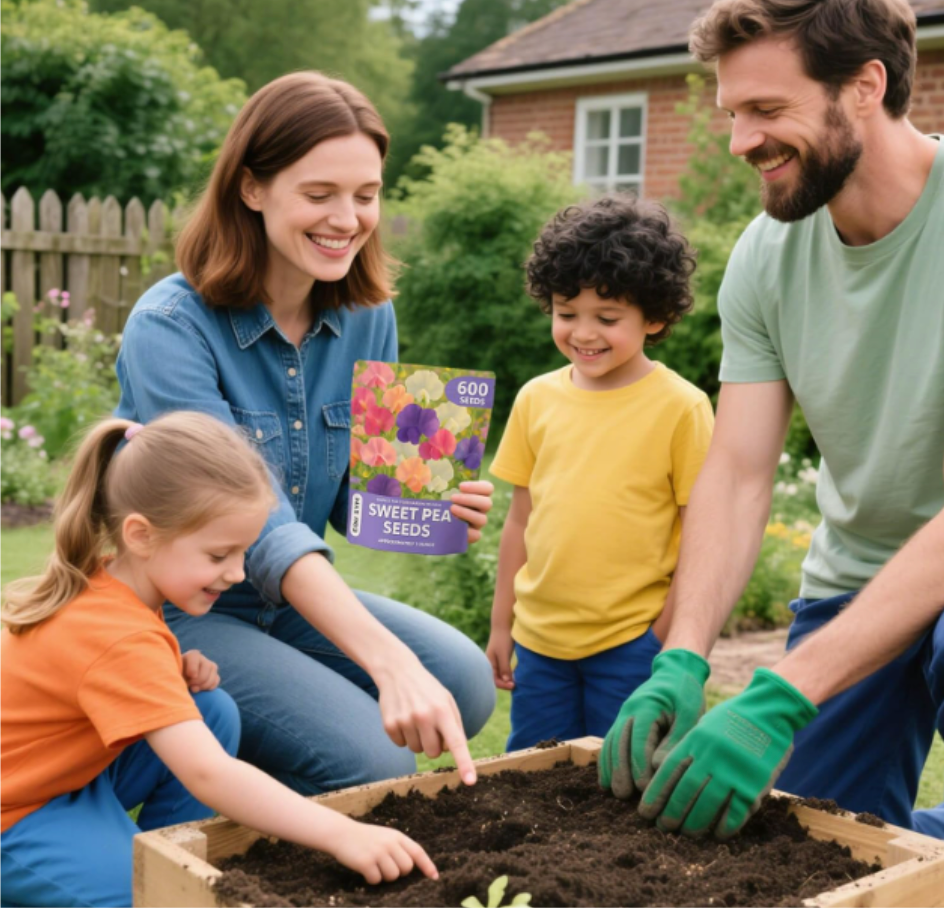
Photo from the Amazon product listing showing a family planting these seeds in the type of raised garden bed many people use for vegetables.

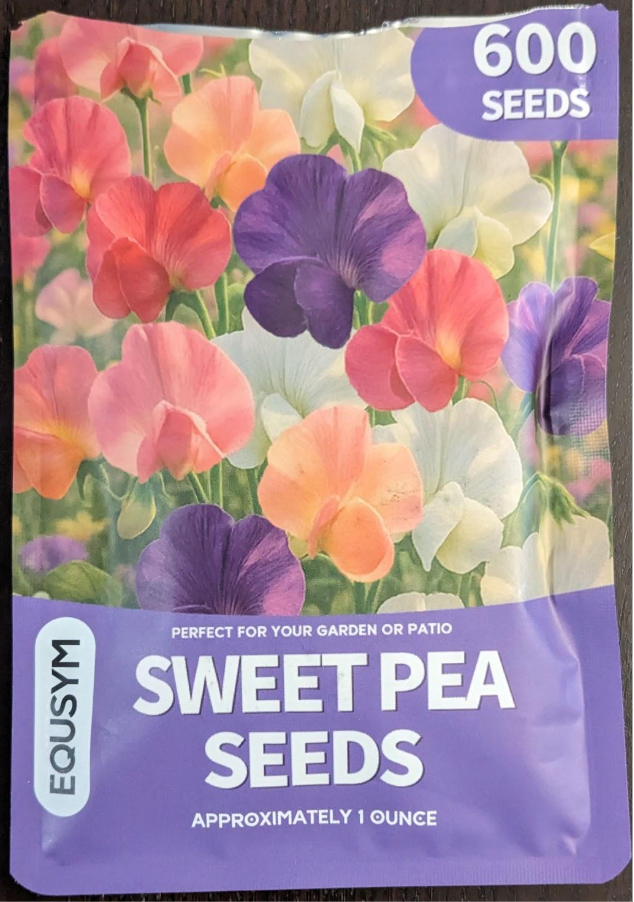
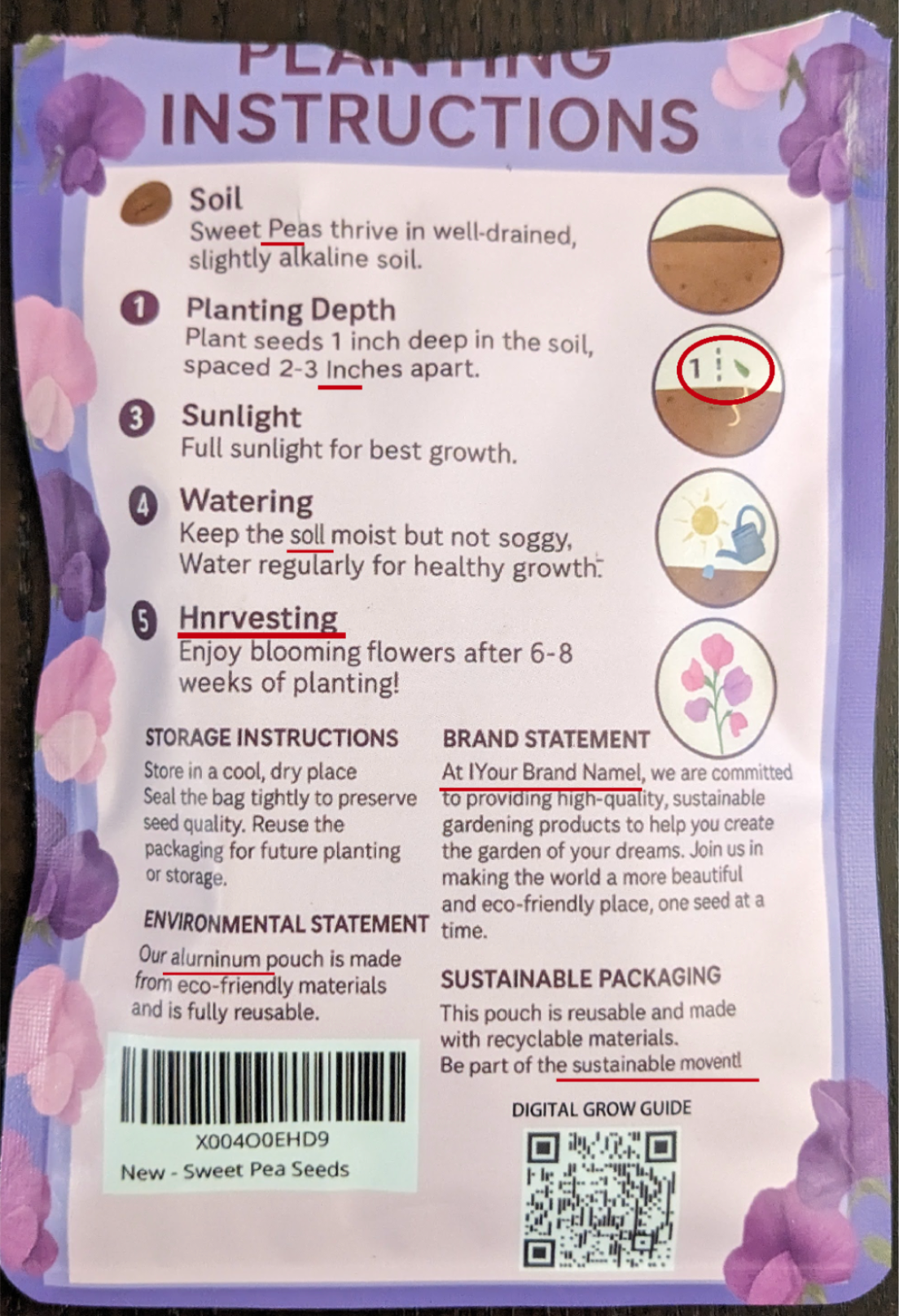
The plant pictured on the packet is likely Lathyrus odoratus or L. belinensis, which are grown for their attractive and fragrant flowers, but are toxic to humans. They are not edible sugar snap peas, Pisum sativum. I searched the front and back of the package for a warning that the species in the photo is not edible and should never be eaten. I found extensive grammar, spelling, capitalization and basic copy editing errors, but no species name or warning that the sweet peas in the photo are toxic.


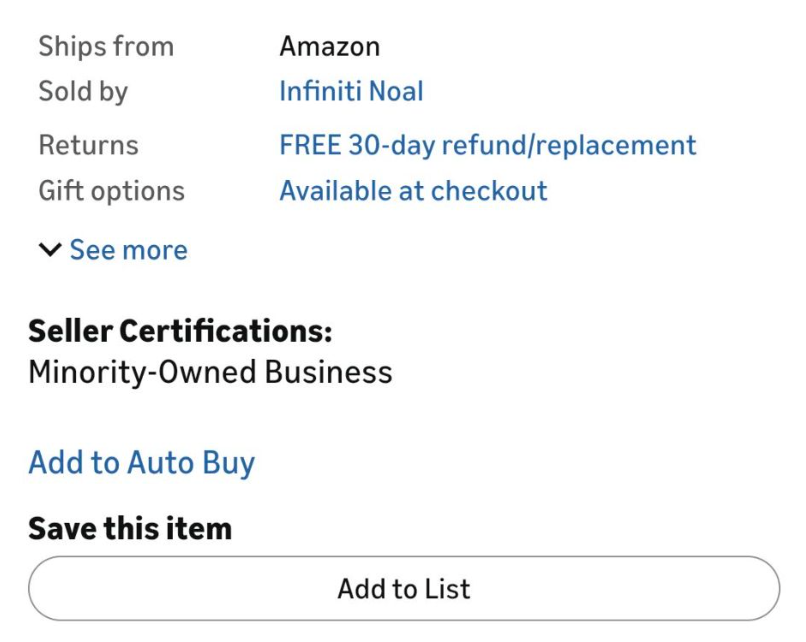
Amazon promotes this listing as “Amazon’s Choice” and its “Overall Pick”. In the listing, it states, “This product is from a small business brand. Support small”. Should we trust Amazon?

Front image of sweet pea seed package with brand name “EQUSYM”
Back image of seed package. The red highlighting indicates errors in grammar, spelling, punctuation and basic copy editing

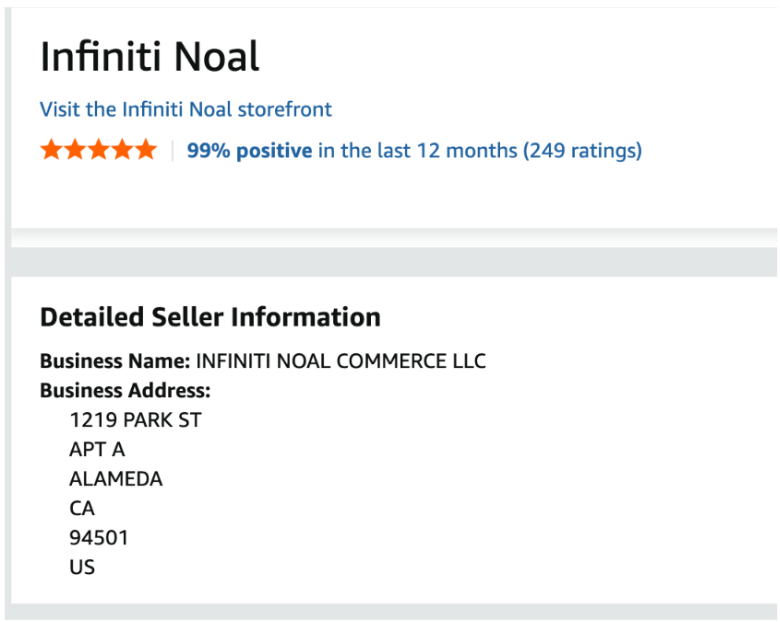
The brand on the front package and webpage listing is “EquSym”, and on the back of the package under “Brand Statement” it appears they forgot to replace “Your Brand Name” with their brand name, “EquSym”. The company on the listing is “Infinity Noal”. I cannot find a website or any other direct contact for a seed supplier of either name. The address for “Infinity Noal” is 1219 Park St, Apt A in Alameda, California. Would a reputable seed company be shipping out of Apartment A in one of the densest urban areas in the country? And if there isn’t enough room in Apartment A to produce all these seeds, where are they actually sourcing their seeds from?

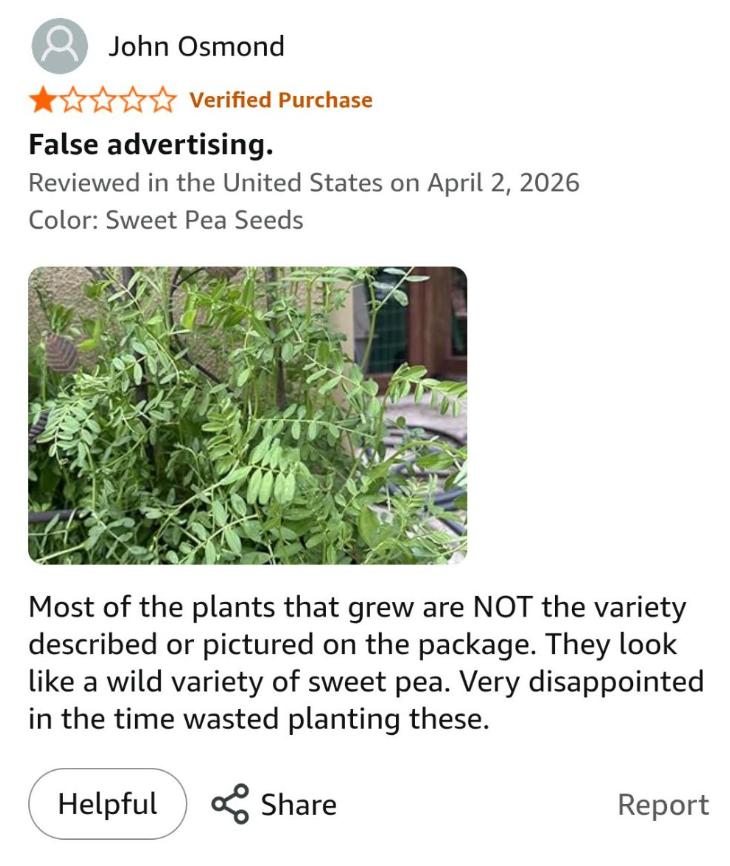
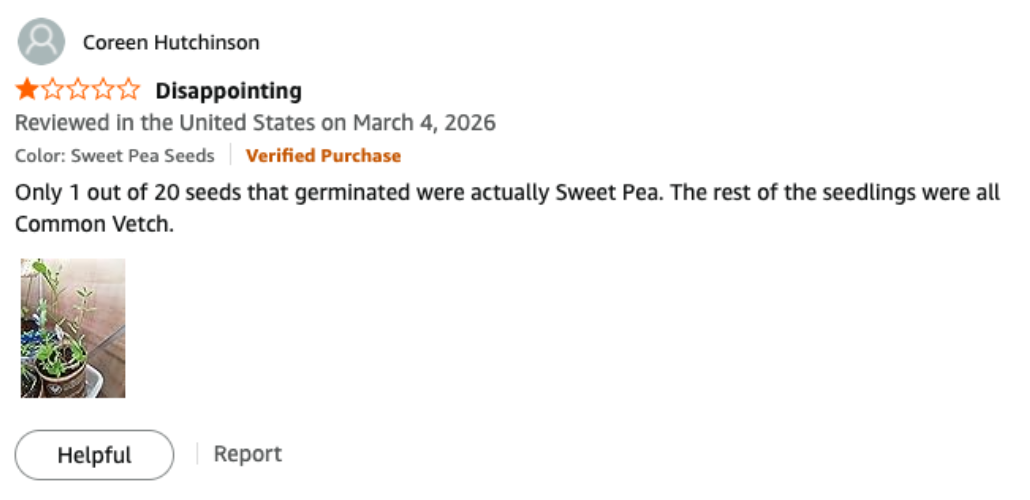
Several reviews mention that the seeds were common vetch or other wild pea species, but not the sweet pea species pictured on the seed packet.

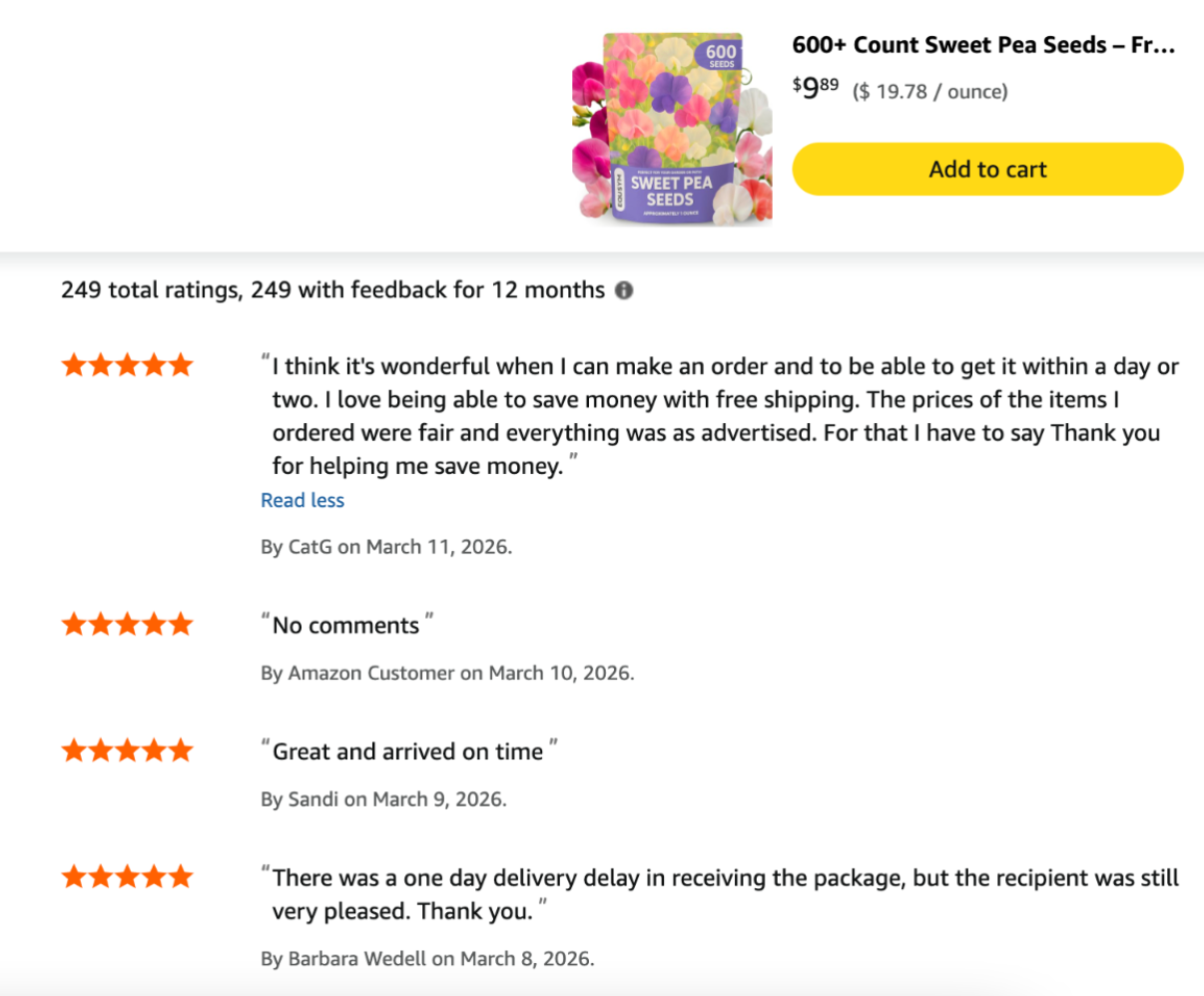
Fake and misleading reviews are a common problem on Amazon. For this product, the brand and company are highly rated, but many of the reviews seem like they may be fake, and at any rate only mention shipping and do not address the quality of the product (one even says, “No comments” and rates five stars)

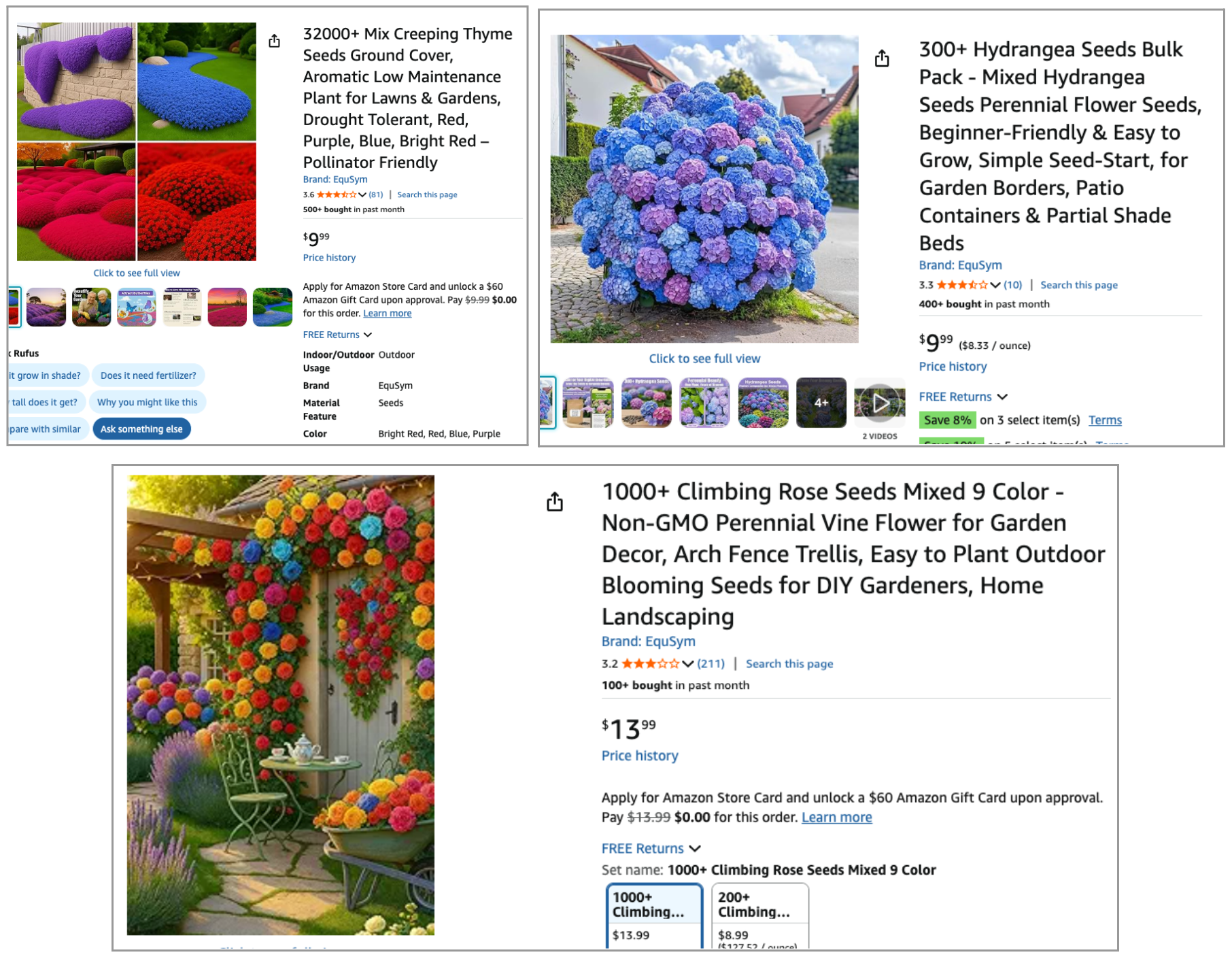
The brand also has other listings with images that appear unrealistic, likely aided by AI image generators.

In a previous blog post, I recommended several trustworthy seed companies, and intentionally excluded Amazon. The companies I recommended sell ornamental sweet pea seeds, and their webpages have appropriate toxicity warnings (for example, see Kitchen Garden Seeds, Hudson Valley Seeds, Baker Creek). Amazon’s platform is optimized for one thing: profit. In the case of these sweet peas, we can see they have foregone due diligence, appearing to allow fraudulent companies, listings, products and reviews on their site. 


In closing, my advice is to stick with a seed company with values that extend beyond profit maximization. Established specialty seed suppliers care enough about your well-being to tell you when a plant is toxic, especially when there are edible species with similar common names. Small seed companies like those in my previous post understand the unquantifiable value of plants, people and the relationships between them. Stick to transparent, traceable seed suppliers for safety and a far superior product. Happy planting!!

Share this post on

Recent Posts

April 22, 2026
By Naomi Shea The season has officially kicked off at Watertown Community Gardens, bringing excitement and potential for new growth—both in the garden and within our community. This season, we're thrilled to have partnered with Waltham Fields Community Farm (WFCF), which graciously opened its greenhouse to support our efforts in planting our donation plots. Arsenal Park Community Gardens (APCG) captains, Marilyn and Susan, carefully prepared trays of seedlings at home before transporting them to the greenhouse. These trays included a variety of crops such as lettuces, mixed greens, leeks, onions, tomatoes, kale, chives, parsley, and more!
March 3, 2026
Fostering Community Through Sustainable Food Practices
February 28, 2026
WCG wants to help gardeners in the community grow the best plants for pollinators and diversity of local wildlife! Now is the time to be planning our gardens, and planting native plant seeds! Turning gallon jugs into mini-greenhouses is a great way to grow your own plants, a method called “winter seed sowing”. We have instructions for this method here: Winter Seed Sowing Basics - WCG.pdf Seeds that require 30 days or fewer of cold stratification (exposing seeds to cold, moist conditions to break dormancy). Even though snow is melting, seeds can still be stratified in temperatures between 34 and 40 degrees Fahrenheit.
April 22, 2026
By Naomi Shea The season has officially kicked off at Watertown Community Gardens, bringing excitement and potential for new growth—both in the garden and within our community. This season, we're thrilled to have partnered with Waltham Fields Community Farm (WFCF), which graciously opened its greenhouse to support our efforts in planting our donation plots. Arsenal Park Community Gardens (APCG) captains, Marilyn and Susan, carefully prepared trays of seedlings at home before transporting them to the greenhouse. These trays included a variety of crops such as lettuces, mixed greens, leeks, onions, tomatoes, kale, chives, parsley, and more!
March 3, 2026
Fostering Community Through Sustainable Food Practices
February 28, 2026
WCG wants to help gardeners in the community grow the best plants for pollinators and diversity of local wildlife! Now is the time to be planning our gardens, and planting native plant seeds! Turning gallon jugs into mini-greenhouses is a great way to grow your own plants, a method called “winter seed sowing”. We have instructions for this method here: Winter Seed Sowing Basics - WCG.pdf Seeds that require 30 days or fewer of cold stratification (exposing seeds to cold, moist conditions to break dormancy). Even though snow is melting, seeds can still be stratified in temperatures between 34 and 40 degrees Fahrenheit.

RECENT Posts